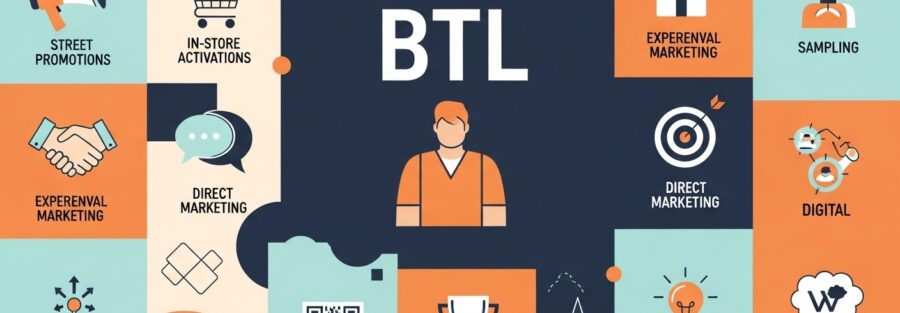
You’ve probably walked past a product demo in a mall, participated in a contest at a local fair, or received a free sample that made you curious about a brand. That’s BTL marketing at work and when done right, it doesn’t just grab attention. It creates conversations, builds trust, and turns curious onlookers into loyal customers.
In a world where digital ads are everywhere and consumers have developed banner blindness, BTL (Below-The-Line) activities offer something different: real human connection. These aren’t campaigns people scroll past. They’re experiences people participate in, remember, and talk about.
But here’s the thing: not all BTL activities are created equal. Some leave lasting impressions. Others are quickly forgotten. After working with hundreds of brands across India, we’ve seen which tactics actually move the needle. So let’s cut through the noise and look at the 10 BTL activities that consistently deliver results.
- Product Sampling Campaigns: Let the Product Speak
There’s an old marketing adage: “The best advertisement is a good product.” But people can’t love your product if they’ve never tried it.
Product sampling removes the biggest barrier to purchase uncertainty. When someone tastes your snack, feels the texture of your fabric, or tests your skincare product, they’re no longer making a decision based on advertising promises. They’re making it based on experience.
Why it works:
– Eliminates purchase hesitation
– Creates immediate product trial
– Generates word-of-mouth buzz
– Drives impulse purchases
We’ve seen FMCG brands achieve conversion rates as high as 35% from well-executed sampling campaigns. The key? Strategic placement. A beverage sample works better on a hot afternoon in a busy market than in an air-conditioned mall. Context matters.
Real impact: During festival seasons, brands that set up tasting booths at high-footfall locations don’t just distribute samples, they create brand advocates who go home and tell their families about the discovery they made.
- Mall Activations: Where Shopping Meets Experience
Shopping malls in India aren’t just retail spaces anymore. They’re social destinations. Families spend entire afternoons there. Young people hang out. It’s where your audience is already in a receptive mindset.
Smart brands turn this opportunity into interactive experiences. We’re talking about more than just a kiosk with brochures. Think photo booths with branded backdrops, interactive games with instant prizes, product demonstrations that draw crowds, or AR experiences that create social media moments.
What makes mall activations effective:
– Captive audience with time to spare
– Higher income demographics in premium malls
– Perfect environment for hands-on engagement
– Natural setting for impulse purchases
The best mall activations we’ve seen don’t push sales; they offer value. Entertainment, education, or a memorable experience. The sales follow naturally.
- Society and RWA Activations: Building Trust at the Doorstep
Here’s something most marketers overlook: residential societies are tight-knit communities where trust spreads fast. If your neighbour recommends something, you’re more likely to try it than if a celebrity endorses it on TV.
Society activations work because they meet people in their comfort zone. Whether it’s a health check-up camp, a product demo during a weekend morning, or a workshop that adds value to residents’ lives, you’re building brand presence where people actually live.
The advantage:
– Direct access to families
– Lower ad clutter compared to public spaces
– Opportunity for extended engagement
– Community endorsement effect
Financial services brands, home appliances companies, and wellness products have found goldmines in society activations. The conversion rates here often outperform traditional retail because you’re not interrupting someone’s day—you’re adding to it.
- Event Sponsorships: Association That Builds Credibility
When your brand sponsors a local marathon, a college fest, or a cultural event, you’re not just displaying a logo. You’re aligning your brand with something people care about.
Event sponsorships work on multiple levels. First, the visibility of your brand is front and center. Second, there’s association if people love the event, they transfer some of that positive feeling to your brand. Third, there’s recall every time someone thinks about that event, they remember your brand was part of it.
Smart sponsorship strategies:
– Choose events that align with your brand values
– Don’t just display banners – create experiences within the event
– Leverage social media before, during, and after
– Collect leads through contests or registration activities
Sports brands sponsoring tournaments, educational companies supporting college fests, health brands backing fitness events the alignment creates authenticity that pure advertising can’t buy.
- Roadshows: Taking Your Brand Directly to the People
If mall activations are about meeting people where they shop, roadshows are about meeting them where they live, work, and gather. These mobile campaigns travel across neighborhoods, towns, or entire regions, creating multiple touchpoints with your audience.
The magic of roadshows lies in their flexibility. Your branded vehicle can stop at markets, bus stands, office complexes, or village squares. Each location gives you access to different demographic segments throughout a single day.
What makes roadshows powerful:
– Geographic coverage you can’t get from static locations
– Ability to target specific areas based on data
– Creates buzz as people see you moving through their area
– Cost-effective compared to setting up multiple permanent locations
We’ve seen automobile companies, telecom providers, and rural-focused brands achieve remarkable reach through well-planned roadshows. The key is consistency and choosing high-traffic stops strategically.
- In-Store Promotions: Converting Interest at the Point of Decision
The retail shelf is a battlefield. Your product sits next to 20 competitors, and consumers make decisions in seconds. In-store promotions tip the scale in your favor right when it matters most.
These can take many forms: product demonstrators explaining features, special pricing with eye-catching displays, combo offers that increase cart value, or interactive elements that make people stop and engage.
Why it delivers results:
– Captures consumers with high purchase intent
– Provides last-minute information that influences decisions
– Creates sense of urgency with limited-time offers
– Generates trial among fence-sitters
The brands that win here understand retail psychology. A well-placed promoter who can answer questions, a compelling display that stands out, or a limited-time offer that triggers FOMO – these elements convert browsers into buyers.
- Gamification and Contests: Making Engagement Fun
Remember being excited about spinning a wheel for prizes? That’s gamification working its magic. When you turn brand interaction into a game, something interesting happens people don’t feel like they’re being marketed to. They feel like they’re having fun.
The psychology here is simple: games trigger our competitive nature and reward-seeking behavior. Whether it’s a quiz that tests product knowledge, a challenge that demonstrates product benefits, or a social media contest that creates buzz, gamification makes people willing participants in your marketing.
Elements that work:
– Simple rules anyone can understand
– Instant gratification or quick results
– Prizes worth competing for (but achievable)
– Social sharing elements to amplify reach
We’ve implemented gamified activations where engagement rates soared above 60%. One campaign using an audio meter game for a seeds brand created so much buzz that villages we hadn’t even visited requested our team to come there.
- Campus Activations: Winning Young Hearts Early
College students are trendsetters. They’re digitally savvy, socially connected, and at a life stage where brand preferences are still forming. Win them now, and you’ve potentially gained customers for decades.
Campus activations work because they speak the language of youth. Whether it’s a gaming tournament, a music event, a talent competition, or a workshop on relevant skills, the goal is to become part of campus culture.
What makes campus marketing unique:
– High social amplification through student networks
– Authenticity matters more than polish
– Digital and physical integration is expected
– Influence extends beyond campus through social media
Tech brands, fashion labels, food and beverage companies, and even financial services targeting young adults have found campuses to be incredibly fertile ground. The trick is to add value, not just advertise.
- Experiential Installations: Creating Instagrammable Moments
In 2026, if your BTL activity isn’t “Instagram-worthy,” you’re missing half its potential. Experiential installations are designed to be so interesting, beautiful, or engaging that people can’t help but capture and share them.
These aren’t just photo booths though those work too. We’re talking about immersive brand experiences: AR zones where you interact with products virtually, 3D installations that showcase your brand story, sensory experiences that engage multiple senses, or interactive walls where consumers co-create with your brand.
The social amplification effect:
– One participant’s photo reaches hundreds of their followers
– User-generated content provides authentic testimonials
– Creates FOMO that drives more participation
– Extends campaign life far beyond the event date
Luxury brands, lifestyle products, and entertainment companies have mastered this. When done right, a two-week installation can generate social content that keeps circulating for months.
- Direct Engagement Programs: Building Relationships One Conversation at a Time
Sometimes the most effective BTL activity is also the simplest: having actual conversations with potential customers. Direct engagement programs whether door-to-door in residential areas, table-to-table in restaurants, or farmer-to-farmer in rural markets create personal connections that mass media never can.
These programs work particularly well for complex products that benefit from explanation, high-involvement purchases where trust matters, or new market segments where awareness is low.
The power of personal touch:
– Addresses specific customer concerns in real-time
– Builds trust through face-to-face interaction
– Collects valuable feedback directly from target audience
– Creates brand ambassadors through quality engagement
We’ve seen insurance products, agricultural solutions, and B2B offerings find tremendous success with direct engagement. When a knowledgeable brand representative takes time to understand someone’s specific needs and explain how a product helps, conversion rates can exceed 40%.
The Common Thread: Authenticity and Value
Looking at these 10 activities, one theme emerges clearly: the most effective BTL campaigns offer genuine value beyond just selling. They entertain, educate, solve problems, or create memorable moments.
The brands that succeed in BTL marketing understand a fundamental truth: people don’t hate marketing. They hate bad marketing. They hate being interrupted, deceived, or treated like walking wallets. But they love discovering new products that improve their lives. They appreciate brands that respect their time. They remember experiences that made them smile.
Making BTL Work for Your Brand
As you plan your next BTL campaign, ask yourself:
– Is this interrupting or adding value? The best BTL activities feel like a gift, not an intrusion.
– Am I creating a memory? People forget features and pricing. They remember how you made them feel.
– Does this respect my audience’s intelligence? Consumers are smart. Authenticity always beats gimmicks.
– Can I measure this? From leads collected to sales lifted to social mentions—know what success looks like.
– Am I choosing the right activity for my product? A tech gadget needs demonstration. A snack needs sampling. A service needs explanation. Match the activity to the objective.
The Real ROI of BTL Activities
Here’s what most ROI calculations miss: the compounding effect of good BTL marketing. Yes, you see immediate metrics samples distributed, leads collected, sales generated. But the real value accumulates over time.
That person who tried your sample might not buy today, but six months later when they need that product category, your brand is the one they remember. That college student at your campus activation might not be your customer now, but in five years they will be. That society activation might generate 50 direct sales, but if those 50 people each tell three friends, you’ve just created 150 additional touchpoints.
BTL marketing plants seeds. Some sprout immediately. Others take time. But when you consistently execute quality BTL activities, you’re not just running campaigns – you’re building a brand that people know, trust, and choose.
In a market as diverse and dynamic as India, where 22 languages are spoken and consumer behavior varies dramatically across regions, BTL marketing’s ability to localize, personalize, and humanize brand communication isn’t just an advantage. It’s often the difference between brands that grow and brands that get forgotten.
So the question isn’t whether BTL activities work. The question is: which ones will work best for your brand, and are you executing them with the authenticity and creativity they deserve?
Because at the end of the day, the most effective BTL activity is the one that makes someone stop, engage, and think: “This brand gets me.” Everything else follows from there.